


The gap
Most studios know their playtest found issues.
Very few know which moment caused them.
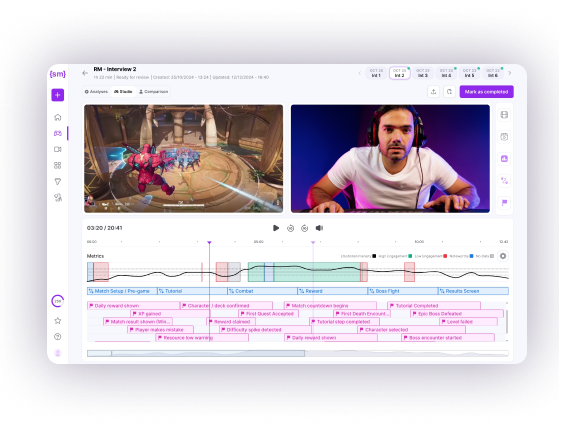
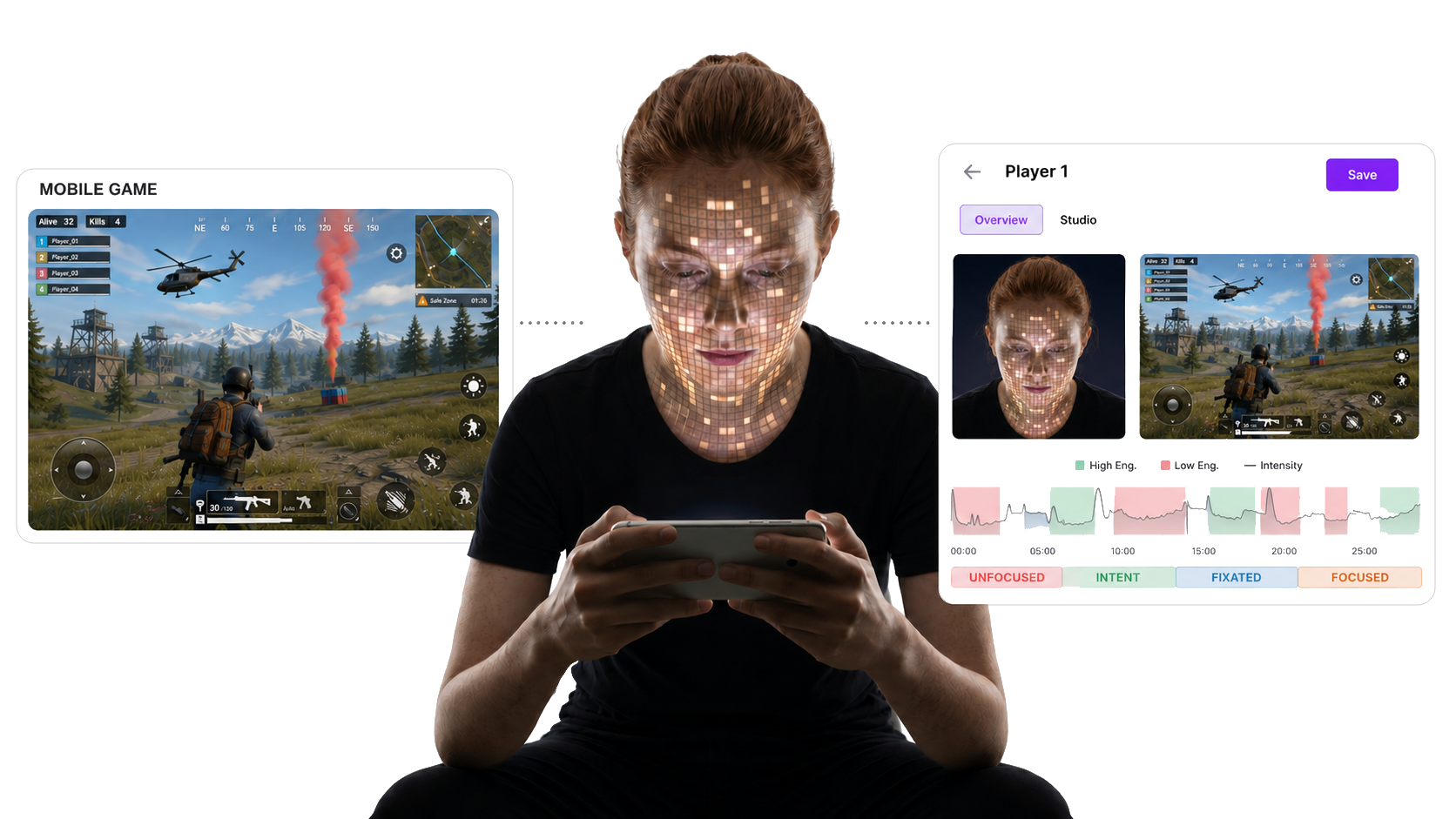
Traditional playtests give you a bug list and a set of opinions. Both arrive after the session ends. Neither tells you which moment in the game broke the experience — or whether the player who went quiet at minute four was confused, bored, or just thinking. You're making design decisions on anecdote when the actual signal was happening in real time.
Asking players to describe what they're feeling pulls them out of the state you're trying to measure. The act of reporting disrupts the signal. You get a commentary, not an experience.
By the time a player answers a survey, the raw emotional reaction is already rationalised. They describe the version of the session they've reconstructed — not the one they were in.
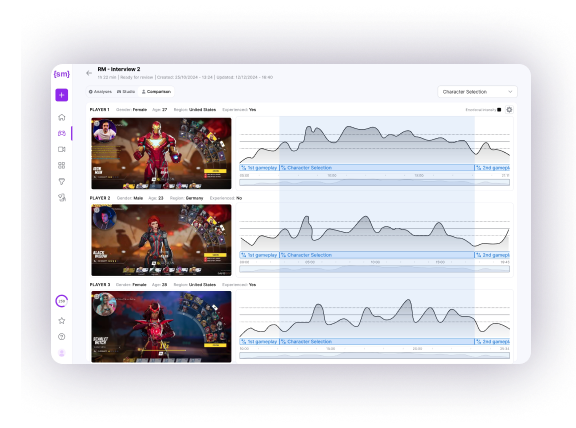
A researcher in the room catches some signals and misses others. Observations differ between researchers. Patterns across players are assembled from notes, not data. The learning is only as good as the observer.
"The decision to leave was made earlier than your dashboard shows."